

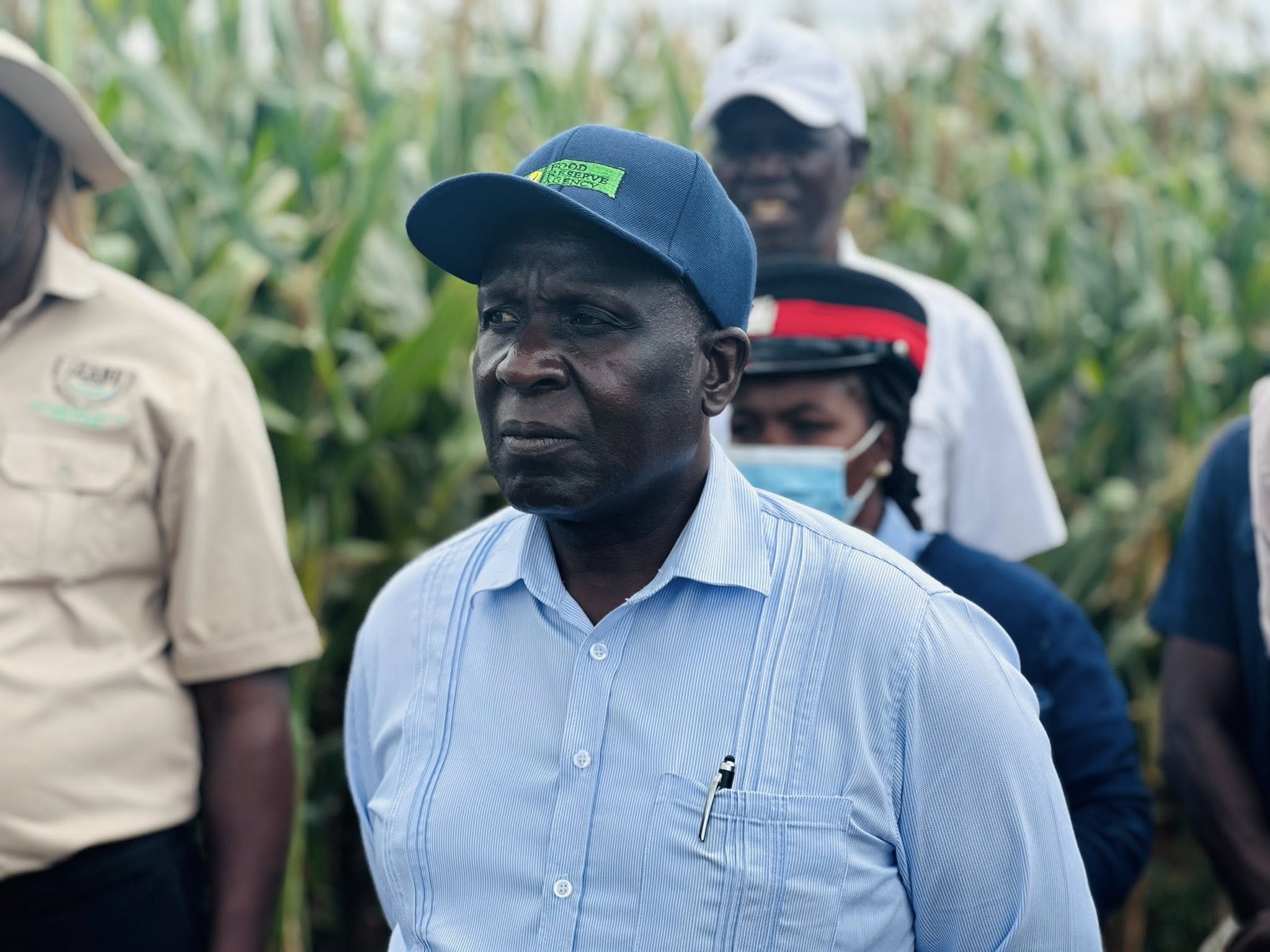
Minister of Agriculture Reuben Mtolo says his Ministry will this year remove ghost farmers from the Farmer Input Support Programme (FISP).
Mr Mtolo says the government wants to ensure that only vulnerable but viable farmers are benefitting from the FISP programme and not any individuals.
ZANIS reports that he was speaking during the National Research and Fields Day held at the Zambia Agriculture Research Institute (ZARI) in Chilanga.
The event was running under the theme ” Fostering trade and investment through sustainable agriculture technologies and value chains”
Mr Mtolo noted that the theme highlights the government’s policy direction of building a productive, resilient and market oriented agricultural sector which underscores the importance of linking research, technology, trade and investment as key drivers of sustainable agriculture growth.
” Government policy is focused on transforming the agriculture sector through increased productivity, enhanced food security and diversification of crops. This is being achieved through the strengthening of value chains that improve competitiveness, promote value addition and facilitate market access both regionally and internationally”, the Minister explained.
Mr Mtolo points out that without innovation and appropriate technologies productivity gains will remain limited and it is for this reason that the government continues to prioritise investment in research, extension services and technology transfer.
Speaking at the same event, Ministry of Agriculture Acting Permanent Secretary for Technical Services Chizumba Shepande indicated that the national target set by the Republican President Hakainde Hichilema is to achieve production levels of 10 million metric tonnes of Maize and 1 million metric tonnes of soybeans and wheat by the year 2031.
He notes that to achieve the targets, the government is implementing a number of strategic interventions which include science based soil mapping to guide fertiliser application, strengthening the national seed system, expanding irrigation through dam construction and water resource mapping and improving extension service delivery.
Acting Chilanga District Commissioner Maureen Chilende noted that sustainable agriculture is key to unlocking Zambia’s trade and investment potential.
She notes that sustainable agriculture and technologies will further contribute towards food security and improve the nutritional value of the vulnerable people in society.
Meanwhile, Laster Kabutu, a farmer, has called on the government to consider increasing the FISP input allocation.
Mr Kabutu noted that the farming population has grown in the district and despite discouraging people from sharing the inputs, individuals tend to share their inputs with those who do not have so that they too can benefit.
He further thanked the government for the Field Day event, noting that it helps improve knowledge on different climate smart agriculture technologies and practices to farmers and other people interested in agriculture.