
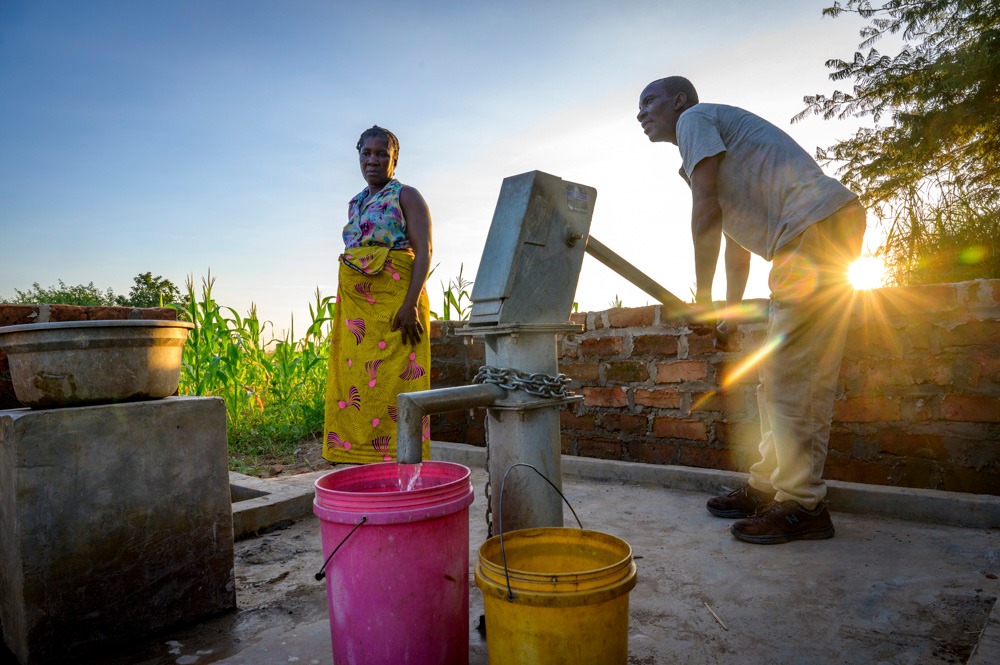
Chief Shikabeta of the Soli people in Rufunsa district has appealed to Government to construct boreholes in his chiefdom in order to ensure that subjects have clean drinking water.
Chief Shikabeta bemoaned that some areas in his chiefdom lack adequate supply of water hence the need to sink some boreholes.
Speaking to ZANIS in an interview, the traditional leader called on the government to consider drilling more boreholes in his area.
He attributed the shortage of water to low rainfall received in the area in the previous rain season.
The traditional leader said water blues become worse during the dry season.
“The problem of water in my area poses severe hardship, extra expense and health risks on my people. What we are supposed to spend on food, we spend it on water,” he said.
Chief Shikabeta said as a result, women walk long distances to fetch water and often resort to getting the commodity from unprotected sources such as shallow wells and streams.
He explained that the scarcity of water is worsened by uncontrolled obstruction of water by some farmers upstream.
He has since appealed to stakeholders to partner with him as well as the local authority to advocate for water security, governance and management in order to ease the lives of his subjects.
Chief Shikabeta added that the shortage of water has a negative impact on business.
To address the water scarcity, the Government through the National Rural Water Supply and Sanitation Programme envisages to improve rural water supply in Zambia so that 75 percent of the rural population will be within 0.5 kilometre from an improved water supply by 2030.