
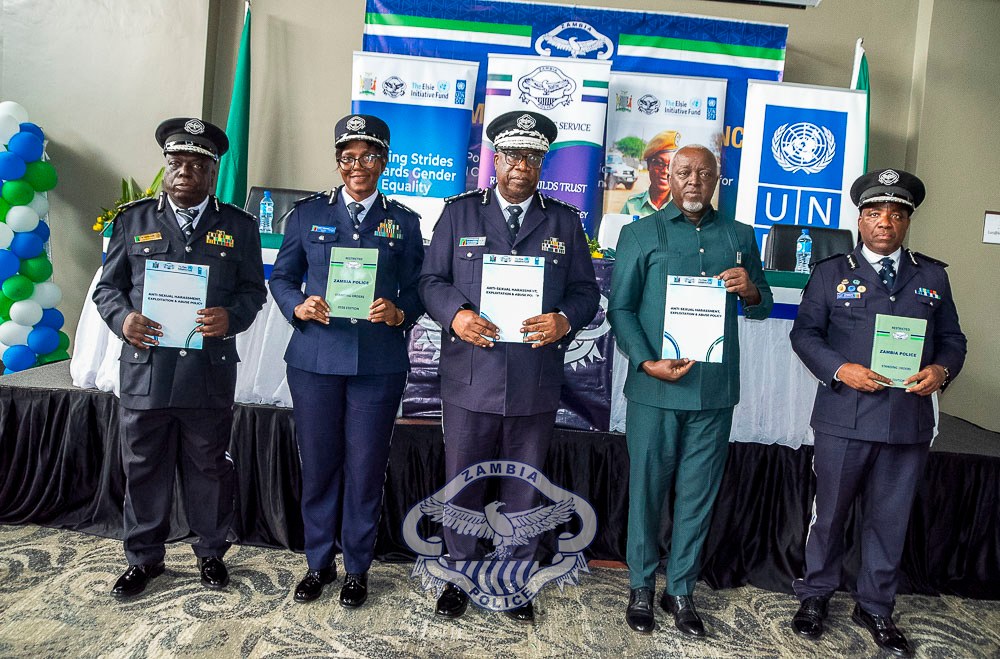
Zambia Police Service, in partnership with the United Nations Development Programme (UNDP), has launched the revised Zambia Police Standing Orders and the Anti-Sexual Harassment, Exploitation and Abuse (Anti-ASHEA) Workplace Policy key instruments aimed at strengthening integrity, discipline and protection of women within the service.
The two policy documents were funded through the Elsie Initiative, with technical support from UNDP.
Speaking during the 2026 Zambia Police Service Commanders Conference in Lusaka, Inspector General of Police Graphel Musamba said the launch underscores the service’s firm commitment to dignity, professionalism and operational excellence as the country approaches the 2026 general elections.
“These two policies represent our firm commitment to dignity, professionalism and operational excellence as we approach the 2026 general elections,” he said.
He stressed that the Anti-ASHEA Policy recognises sexual harassment and abuse in the workplace as challenges that require systemic solutions.
“Any Police Officer, regardless of rank or position, found to have violated these standards will face immediate disciplinary action,” he said.
He further emphasised that every police officer, without exception, is duty-bound to understand and strictly adhere to the revised standing orders.
Meanwhile, Zambia Police Service Director of Peace Support Operations Chomba Chaongopa said the policy documents will guide conduct, inform command decisions, and shape institutional culture for years to come.
He noted that the Zambia Police Service has historically been perceived as a male-dominated institution, a perception he said must now change.
“The two documents are not just administrative updates; they are the real blueprint that reflects institutional cultural change,” he said.
And UNDP Deputy Representative Laurent Radasingwa described the launch as a shared commitment to empowering women and promoting peaceful workplace operations within the Police Service.
He explained that the policies form part of strategic recommendations arising from the Measuring Opportunities for Women in Peace Operations (MOWIP) Assessment.
Mr Radasingwa added that sexual harassment, exploitation and abuse pose serious institutional risks which, if left unaddressed, can undermine morale, weaken internal cohesion and erode public confidence.
He reaffirmed UNDP’s continued commitment to working alongside the Zambia Police Service in advancing inclusive, accountable and professional policing.