
The Road Development Agency (RDA) has reported major milestones in Zambia’s road sector in 2025, with remarkable progress made under both Public Private Partnerships (PPP) and government-funded projects.
Speaking at the end of year media briefing in Lusaka, RDA Board Chairperson, Eugene Haazele, said this year has been one of tremendous progress, important milestones, and renewed commitment for Zambia’s roads and infrastructure.
Mr Haazele said the agency remains focused on enhancing connectivity, promoting economic growth, improving road safety, and integrating rural communities into the broader economy.
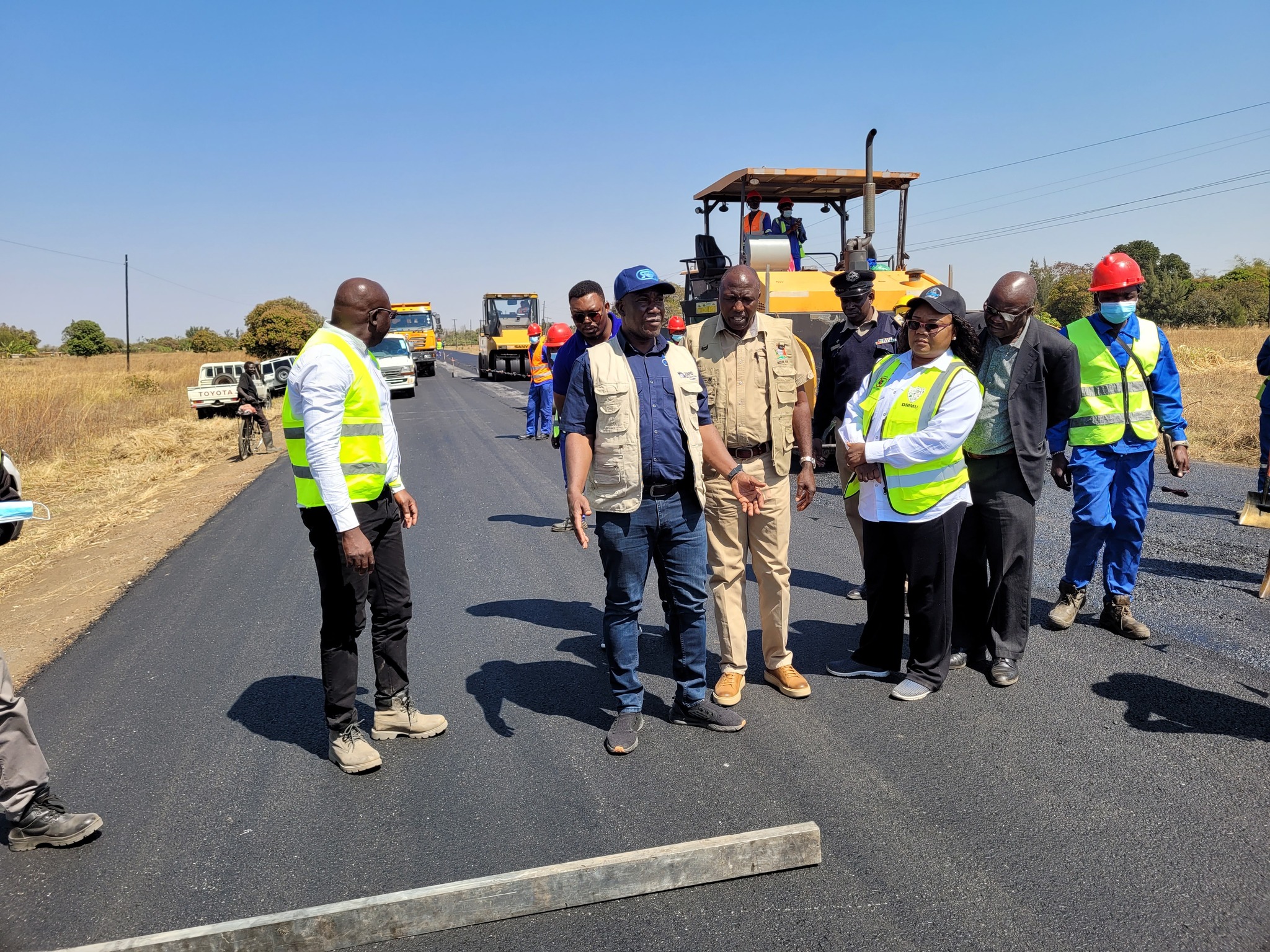
He described the Lusaka-Ndola dual carriageway as the agency’s flagship project, which has now reached 58.54 percent completion, with 236.15 km of asphalt surfacing laid.
“The 45-kilometre Luanshya to Fisenge to Masangano section is already under operation and maintenance,” he said.
The Kasomeno-Mwenda road and bridge project, which includes a 345-metre cable-stayed bridge across the Luapula river and a one-stop border post, is advancing steadily.
“Road works are at 15.5 percent while bridges are at 6.3 percent,” Mr Haazele said.
He said the newly launched PPP projects, including the Mutanda-Kaoma road and the Solwezi-Kipushi road, have commenced early works under equity financing.
Government-funded projects have also made significant progress across the country.
Other projects advancing under treasury funding include the Blue Lagoon road, at 32 percent completion, the Batoka-Maamba road at 42 percent, and the Mazabuka-Monze road at 70 percent.
Mr Haazele further noted that the Lusaka-Mongu road section from Tateyoyo Gate to Lukulu junction is at 24 percent.
The RDA has also partnered with the Zambia Army and Zambia National Service on the Acrow Bridge programme, completing 19 out of 131 targeted bridges to date.
“These bridges are critical in connecting rural areas and improving mobility,” he noted.
He highlighted the broader benefits of these investments, stating that improved roads mean shorter travel times, lower vehicle operating costs, and enhanced access to markets, health services and education.